GRAFFITI REVIEW: THOUGHTS OF EMPIRE

Image

By Joel Pablo Salud

However much I disagree with the way Sultan Jamalul Kiram III and his royal forces conducted their entry into Sabah, I can’t help but honor the courage displayed by the Tausugs. Theirs is a warrior society undiminished by time. For him and his lineage, Sabah was not a piece of land to claim. It was theirs for the longest time, every bit of soil and shrub of that patch of the former North Borneo. It was not simply some real estate under the Kiram name. History had attested that North Borneo was and is still Sulu Sultanate territory, the one roaring reality that had stood unchanged amid the yellowing of years and varying voices claiming the Sulu throne.

As fierce battle raged between the Kirams and Malaysian forces in Lahad Datu all the way to adjacent villages, it bears mentioning that another battle was taking place in cyberspace. News reports maintained that hackers from Malaysia and the Philippines conducted a salvo of attacks against each other to mirror the fracas on land. Even as the seven battalions of Malaysia’s armies swooped down on the brave 300 Tausugs holed up in one Sabah town, hackers from Anonymous allegedly raised a campaign against each other in retaliation for hostilities. From reality to virtual reality, it seems the relationship between the Philippines and Malaysia will never be the same again.

The war in cyberspace was inexorable. The day and age of a totally different contest for power had begun. Without guns and the thunder of a million soldiers’ footsteps, “wars” can now be waged with the flick of an “enter” button. I will not hazard to say it’s an exciting prospect in light of death tolls nations incur in real-time skirmishes.  As information slowly equals the worth of actual human lives, losses in cyber wars could be as equally devastating as conventional warfare.

Speaking of conventional warfare, Malaysia seemed to have missed the point of this engagement entirely. The Tausugs of Sulu had kept watch over their territories and people for centuries, the cost of which didn’t come easy. The battles they had fought—from the time the Sultan of Brunei begged for their help to quell a rebellion, to the day when the Tausug rebel Kimar Tulawie fought the forces of Martial Law under Gen. Mayo, to the very hour the Kirams now face the overwhelming forces of Malaysia—has kept the valiant Tausugs in tiptop form. They fought sword-in-hand with Spain as a superpower to another superpower until the conquistadores thought it was a bad idea to begin with. Sulu had lost sons and husbands, fathers, mothers and daughters. Tausugs have been known to brandish not only sword but women warriors as well. In this part of the Southeast, Muslim and Christian Tausugs fought bravely to stand on what they think is theirs to own. They have kept their honor intact through the centuries until the hour a ruse was staged by the British Crown and Malaysia and foretold the Sultanate’s slow yet inevitable fall.

If only Malaysia had taken this bit of history seriously, it would not have suffered the losses it had incurred in Lahad Datu. I sympathize with Malaysian families who now endure the pain of loss because of this armed engagement in Sabah. They have only their government to blame for it.

As in any war the battle for hearts and minds is inevitable. News items showing varying persuasions and arguments littered Facebook’s newsfeed at the very start of the armed engagement. It’s befuddling to read foreign press taking up the Malaysian spiel. The New York Times took the events to mean that a “religious army” had entered Sabah. This simple yet serious gaffe in research forces the ball to fall into a different court. Then the UK  Guardian came with its headline: “Malaysia bombs Borneo to expel squatter sultan’s private army” with the subhead, “Deadly escalation in crisis sparked by Filipino clan sneaking into Sabah state and asserting ancestral ownership rights.”

Squatters? Sneaking into Sabah? Watering the issue down to a “Filipino clan asserting its rights” over a disputed ancestral area helps little in discovering what had really transpired. I totally disagree with the notion of some that history can hardly be used as a basis for facts, in light of its ever evolving nature. If that is the case, then what the hell are we avid disciples of history for? Yes, there’s a solid trail to all this, however convoluted it may seem. One has but to dig deeper not only into the cache of papers but attitudes accepted in that old world order. And mind you, that old world order cannot be understood in its full context outside of the way people of ancient kingdoms understood and accepted their condition at the time.

Let’s take for example this argument: that Sabah’s thoughts should’ve been considered on the issue of its transfer from the Sultanate of Brunei to the Sultanate of Sulu. The idea wishes to elevate the old North Borneo to the position largely held by modern states today, where it must have a voice in the matter of nationality. It’s as if the theorist is arguing from the premise that North Borneo was a thriving state outside the kingdom of Brunei and the Sulu archipelago at the time. That premise cannot hold water any more than Malaysia’s hands can cup the Tausug warriors.

Why? Granted the North Borneo may seem an independent state from a modern perspective, geographical lines didn’t exist then as we know these lines to exist today. Jovito Salonga, in his 1963 debacle with Sen. Sumulong on the issue of the Sabah claim, asserted that no such demarcations existed. Experts have tracked land bridges connecting the Sulu archipelago with North Borneo, connecting the archipelagic empire in one seamless whole. In the minds of the royals and Sulu’s inhabitants, North Borneo was much a part of the Sulu archipelago as Palawan is to the Philippines. That mindset exists well up to modern times; which is why Suluks have been coming in and out of North Borneo since the glory days of the Sultans. I won’t even be surprised if Brunei’s reasons for the transfer of Sabah to Sulu’s hands had been based, among others, to this fact. North Borneo was a destination the Suluks had always considered home.

On the line of reasoning that Sabahans suffered estrangement because its voice wasn’t in any way heard during the transfer from Brunei to Sulu, I have only this to offer as a thought bubble: Wouldn’t it be more precise to say that such estrangement or alienation “felt” by, say Sabahans, is merely conjecture? A way of modern interpretation of what may have been left unsaid in all this? We have the benefit of hindsight and modern studies, thank God for that. But we all have yet to read a document saying that the Sabahans of old refused to be a part of the Sultanate of Sulu at the time it was handed over by the Sultan of Brunei. Sulu being what it was before, rich in ways we can only imagine, the population of North Borneo then may have wanted it more than anything else.

Another argument I read, which compared our own historical engagement with Spain, didn’t exactly coincide with Sabah’s experience. It assumed that the old North Borneo had always been a separate political and geographic entity, which by and large was in the rightful position to claim self-determination. It therefore hints that North Borneo should have been consulted during the transfer from Brunei to Sulu. But history had nothing to say about that theory. More to the point, modern historians (or so this one claims to be) cannot make conclusions about the ancient world using modern parameters for analysis. Again let me reiterate: that old world order cannot be understood in its full context outside of the way people of ancient kingdoms understood and accepted their condition at the time.

History has this to say: much of the Philippine archipelago then was conquered territory, invaded by a malignant power outside its own. Sulu archipelago remained free despite attempts by Spain to subdue its borders. Sabah has been part of a reigning kingdom long before the various sultanates existed. Called the Nusantara, this archipelagic empire was part of the Buddhist-Hindu Majapahit realm. The Islamic sultanates eventually took the reins of power in the region without breaking into pieces what had already been an ancient and united domain.

Revolution as we know it today—in the context of the formation of sovereign nation-states—came at a time when many, not only the Philippines, thought of engaging the ailing colonial powers. Revolution of this kind is a fairly modern idea, which has much to do with the French Revolution. The old North Borneo, as far as I know, staged no such rebellion against Sulu. Why would it even think of raising its fists when majority of the population were also inhabitants of the Sulu archipelago? Unless, of course, proof of another story exists such as the Sultanate of Sulu maltreating its subjects. But there is no extant document to prove such a thing actually transpired.

As the battle for hearts and minds rages, it appears now that a bigger one in Malaysia is taking place, larger than the Lahad Datu incident. Election in Malaysia is right up the bend, and based on the Malaysian paper, The Edge, American newspapers have of late been allegedly hammering propaganda material to undermine opposition leader Datuk Sari Anwar Ibrahim. PKR vice-president Tian Chua said it is the mark of an insecure government to conduct such a shameful campaign, adding that he expects more from the lobby of the Malaysian government as the elections eases closer.

The report which quoted the US Department of Justice has tagged the Huffington Post, San Francisco Examiner, Washington Times and National Review as those publications singing a discordant tune about Anwar. Joshua Trevino, a said pundit, allegedly received about US$389,000 as retainers from the Malaysian government, having also paid smaller writers amounts to conduct a series of campaigns naming Anwar as “enemy of the state”.

I mentioned this particular incident as an example of how the Malaysian government conducts its affairs of state. The initial confusion as to what had happened in Lahad Datu was proof of Malaysia’s standoffish attitude towards the truth. Word that media practitioners were held back by Malaysian military forces allegedly at gunpoint spread even as the armed engagement between them and the Tausugs commenced. Why the Philippine government trusted Malaysian authorities to broker the peace between the Moro Islamic Liberation Front and the GRP Panel is a thing worth looking into. The Department of Justice, no matter how loyal its leadership is to President Aquino, must spearhead this investigation.

As of this writing, a bombing raid had commenced in the town of Lahad Datu where a  few Tausugs were holed up. Reports said that Malaysia swooped down on the beleaguered Sulu warriors with everything from guns, jet fighters to tanks. With Filipino journalists pushed back, the only news that served the basis of what was happening was Malaysian news bureaus. The initial reports came in, saying that the Filipino fighters were decimated, the town levelled to the ground. It was almost as heartbreaking as it sounds, until independent Malaysian media said that despite the overwhelming onslaught, the Sulu warriors held their ground. The Malaysian air raid missed their target.

War is never anything but a sad and costly affair. A total of 26 lives have been lost since Day One of this battle, and no amount of justification can stand in the face of lives lost. Except one: honor. See, we are here dealing with a people whose ancient souls have yet to relinquish their warrior status, their thoughts of empire. Centuries of battles and centuries of ruse and subterfuge had forced the Tausugs to protect the last vestiges of royal pride and human dignity.. If President Aquino had only seen it in this light, then maybe he could’ve formulated an answer to the lingering question of Sabah and the Sultanate of Sulu. Sadly, he did not.

No, this is not simply a battle fought for land or historic claims. This is empire summoning its last ounce of courage to survive in a world that turns evermore indifferent to its way of life. In this contest, only one shall stand while the other reaps the whirlwind.  Alas, this is the past and the present locked in mortal combat.  
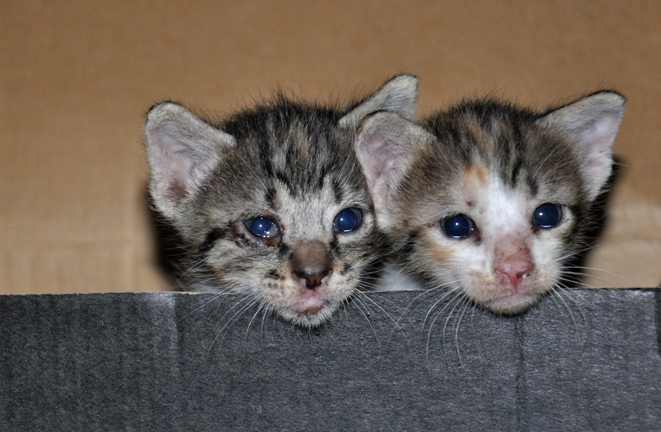
WEEKEND GRAFFITI REVIEW: I SHOULD’VE NAMED HER CHUCK NORRIS

Image

By Joel Pablo Salud

My introduction to this creature of chic Egyptian charm, if memory serves, came when as a child of about two or three a huge tomcat got snoopy enough to take a bite out my little toe.

Obviously, it wasn’t successful. I quickly scampered off the kerb screaming like I had seen a Brontosaurus. I was one of what seemed like a thousand children playing by the wayside with some marbles and rubber bands. Cats of all tints and sizes also roamed the streets of Pasay, with one or two making the gaffe of tip-toeing into the compound in search for food.

Big mistake.

Without getting into the gory details of how children can sometimes act like Hitler’s SS, suffice it to say, some of these furry creatures barely got out of the situation alive. The tomcat that nibbled on my toe like it was cinnamon roll took such a beating from a thousand little hands, it barely escaped with its sanity, let alone a thinning coat pulled, twitched and yanked in all of a million directions.

It took some years before I had the chance to care for one. It was 1973, and it was all the rage to watch Bruce Lee’s Enter the Dragon. A white kitten, splashed with streaks of light golden russet on its back, had its tail caught under the government-issued metal trash bin. I was ten, and seeing it try to wiggle its way out of a dire situation caught me by surprise. I pulled it from under the can and hurriedly brought it home.

Mother was furious. The kitten had tiny bits of soiled food and dirt and everything filthy you can imagine on its fur. I begged mother to give me the chance to raise the poor thing, even promising to work for the crumbs I’d be giving it. Nothing like cute puppy faces to get my Mom to agree, and a cat out of an unwitting hunger strike. But it came with a caveat: the cat stays outside or it goes. I raised my right hand to my chest, proof of my indissoluble oath of allegiance.

I found my kitten a small delivery cardboard box for its home. It occurred to me now just how huge that container was for a kitten barely able to outstrip my toddler shoes. Anyway, so far, so good; and what I first noticed was that its prowess for napping bordered on the legendary. It slept all morning, save for that snatch of a few minutes when it craved for some milk. I had a ready cup of evaporada on the side, mixed with water and a half-teaspoon of sugar. A morsel of bread dipped in sardine sauce sat near the cup. Milk was its favourite for obvious reasons although it did take a bite of the bread once in a while.

Notorious, even at ten, for breaking the rules of God and men, I regularly sneaked my little kitten into the room at night for some playtime and evening snacks of cheddar. I cut strips of cloth for the kitten to play with, mostly coming from old, torn shirts. We would play till we were both exhausted from running and skipping about the room.

This went on for some time until Mom caught the kitten– bigger now by roughly three to four inches—slumped unconscious under my armpits. It was the first time I got caught in bed with someone other than my pillow, so you can just imagine the fury that was unleashed that day. Mom grabbed hold of the kitty and placed it back where I got it: beside the trash bin outside the gates of the compound. I’m not sure but that was probably the first time I wrote a three-line poem about sadness and loss. And about being pissed. I went to bed lonely, disillusioned about parenthood and about life. It hardly drove me to suicide, but then again, I was ten and who could tell?

The morning after, my breakfast of eggs and bacon tasted dull, blasé, even sour. I threw myself onto the couch to settle scores with reruns of Gigantor. Suddenly, a faint meow, too faint to catch amid the blare of Japanese cartoons. I was suddenly in a knee-jerk frenzy to know where that all-too-familiar purr was coming from. I searched far and wide, until right below where I sat watching TV, I saw my little kitten crouched in a corner, wet and cold. I recalled that it rained the night before. I worked against the clock to look for Mom’s hair dryer. In a few minutes, the kitten was warm against my armpit, sleeping with nary a care in the world. On TV was an ad about the latest craze in kung fu movies: Bruce Lee’s Enter the Dragon. Bruce Lee. I’m gonna name it Bruce Lee.

Past the years and several reruns to boot, Bruce Lee grew into probably one of the most gorgeous felines I have seen. She was my first cat, and yes, it was female. She was also the Alpha among the other cats that strayed and stayed with me in between. Rats and mice disappeared where I once lived, and for some reason, even roaches. I remember her having a pride of fifteen kittens which all grew up, and later went off to have families of their own.

Old and barely able to get up, one day, she too disappeared without saying goodbye. But days before that, she was able to fight off a tomcat that intruded into her territory. The clash was so ferocious, the racket kept half the compound awake, hurling expletives in the wind, forcing, too, the huge male to scamper for safety, all bloodied and near death. I knew I made a big mistake naming her Bruce Lee. But I was a kid. Only now do I realize I should have named her Chuck Norris.

Photo: Thok and Mol, two of my present-day kitties.

Dark day at Lahad Datu

Image

By Joel Pablo Salud

The name Lahad Datu, where yesterday’s gun battle exploded between the Malaysian military and forces loyal to the Sultanate of Sulu, was said to have been coined by the Badjaus, meaning , the “State of Datu”.

The name was first used when the royals of the Sultanate of Sulu began migrating to this North Borneo town, East of Sabah, sometime in the 18th century. In modern times, Lahad Datu is named the Palm City. It is the largest producer of palm oil in Sabah.

Which is why the statement made March 1, 2013 by Ricky Carandang, Secretary of Presidential Communications Development and Strategic Planning, seemed to have slipped out of a cave somewhere along the dark side of the moon. While government rightfully condoled with the families who suffered loss, Carandang reiterated the President’s call for the forces loyal to the Sultanate of Sulu to “lay down their arms and return home”.

He said, and I quote: “Since the onset, our primary goal had been to resolve the situation without violence. That is why President Aquino urged the followers of the Kiram family to lay down their arms and return home, so that their grievances can be addressed through sober, productive dialogue.”

What I feel was an unwitting display of rusty insight on the part of government is its understanding of what “home” is to these people. “Home” is North Borneo (Sabah). Barring the labyrinthine arguments on the sundry claims over North Borneo, the name Lahad Datu itself—the State of Datu—proves the standing regal claim of the Sulu monarchy on this part of Sabah. It was not as though the Sulu royals broke diplomatic protocol or had engaged Malaysia in all-out war when they entered Lahad Datu at the start of the stand-off. Government must understand: North Borneo has been their home for the longest time.

Not to overlook reasons by Malacanang to speak as it did, entering Lahad Datu with 300 men armed to the teeth hardly qualified as a homecoming entourage, at least in modern perspective. But on the other hand, the mentality of these Suluk warriors were as old as the very world they say they own, and weapons are as crucial to their identity as the regal status history has accorded them. Government must approach these men in light of such realities if any resolution to the conflict were to be had.

Twelve Filipino Muslims were killed in the engagement. A fewer number from the Malaysian side. It is sad that this administration can only go so far as to make statements that, by dint of mediocrity, sounds good on paper but not in actual practice. And we are all aware this isn’t the first of its many faux pas. Its idea of conflict resolution was to pay no serious heed to the crisis for the sake of the campaign trail.

If this, to them, is leadership, we might as well have a canary for a President.

GRAFFITI REVIEW: TWILIGHT IN SULU

Image

By Joel Pablo Salud


My story on the Muslims of Maharlika—The Forgotten Nobles—sparked my interest in the Sultans of Sulu way back 2010. The story appeared in the BusinessMirror and the Philippines Graphic. From then on, I scoured for documents and materials, even inroads to those who say they are sultans, if only to tell the tale of what seemed like the slowly vanishing history of a once glorious kingdom. I have heard bits and pieces of the country’s claim to Sabah as a young journalist. It was only now I connected all the dots that led to the Sultanate of Sulu.

Perhaps it was the child in me, rivetingly engrossed with the romance associated with kings and princesses that led me to search for answers. Thanks to a good friend, I had my first crack at meeting a Sulu royal early 2011 (or was it 2012?). I met Dayang-Dayang (Princess) Merriam Tanglao Kiram, who introduced herself as the second wife of HM Al-marhum Sultan Moh. Mahakuttah A. Kiram, said to be the 34th Sultan of Sulu and North Borneo, crowned in 1974. Her son, Raja Muda Muedzul Lail Tan Kiram, was crowned sultan recently as a continuing line after his father passed away Feb. 1986. The meeting we had in Makati City was one of formal introduction, and a rundown of a “history” the princess was only too willing to relate.

To cut to the chase, the gist of the conversation revolved around Sulu Sultanate’s glorious past as the richest country this part of Asia—with special emphasis on the word country. It struck me then as rather bold that she should accentuate sovereignty right at the very beginning of the conversation: “My vision, and my son’s vision, is to make the Sultanate of Sulu a member of the ASEAN.” When asked if she understood the implications of her statement, the alleged Princess of the South could only reply, “The intention behind all this is to help the heir, not the national government per se. They have to know there is such a kingdom as the Sultanate of Sulu. Only with such recognition can we thereafter help the government.”

They have to know there is such a kingdom as the Sultanate of Sulu.

So, my natural questions were, among a thousand others: doesn’t the government know? Too, can a government functioning as a monarchy still exist within the framework of a democracy like ours—without rocking the boat? These words by Princess Merriam Kiram kept me up way past the wee hours that night.

I continued my search for answers until another chance to interview a Sulu royal arrived through a member of the family. I met Prince Omar Kiram at the Peninsula Hotel. He recognizes Sultan Fuad Kiram I as the legitimate sultan—all 35 of them—from the time of Sultan Sharif ul-Hashim Abu Bak’r, the proclaimed first sultan in the early and middle 14th-century.

The interview commenced almost immediately, with the prince recounting a version of history I was barely familiar with. He cited Butuan as the seat of the kingdom, “and, at the beginning of the 10th century, was recognized by China with the most favored kingdom nation treaty at that early stage of its development.” By this, he thereby recounted how Butuan rose to prominence until the region turned into a sovereign Sultanate with the arrival of Sultan Sharif ul-Hashim Abu Bak’r. But then, Sabah was raised:

“We have something to be proud about. That’s why our advocacy is for Sabah to be returned to the Sultanate and to the Filipinos because it’s ours. You know how much Malaysia is stealing from us everyday? One million barrels of oil per day. That’s only for oil, equivalent to about US$100 million. A year, it’s a minimum of US$36.5 billion. No wonder they pay the Moro Islamic Liberation Front, other secessionist groups in Minadanao, to create more chaos because their preoccupation is to stay in Sabah unlawfully and isolate Sabah from the Muslim Tausugs and the Filipino population. Because Sabah, to them, is their milking cow. I say milking cow because 95% of Sabah’s riches are siphoned off to Kuala Lumpur. Only 5% are left in Sabah. And Sabah, by the way, consists of over 70% Tausug. Our people. And other Filipinos as well. We are the majority in Sabah. So, for Malaysia to stay there, they have to be able to create a ruse, create chaos so Filipinos cannot unite to recover our land, to recover our property,” Prince Omar Kiram said.

I quoted these two statements to stress that of the myriad and confusing claims that had reached my ears, the issues of Sabah and the Sultanate’s sovereignty are the ones that had remained consistent. Last week, an emissary from the group of Sultan Esmail Kiram II came to the Graphic newsroom to tell their side of the story (this will come out on Monday’s Philippines Graphic). In a nutshell, although they are all split to the core in matters of lineage and history, they all maintain that the Sultanate must rule over all its dominion absolutely, and that North Borneo (now called Sabah) belongs to the Sultanate of Sulu.

I will not argue for one or against the other. I think this battle to reinstate identity belongs exclusively to the royals and constituents of the Sulu Sultanate. But for such a battle to triumph, somehow, the Sultanate must come to terms with the need for a unified stance. Yes, I believe it’s a battle for identity and existence more than anything. All these claims come to nothing—diverse and compelling as they are—if the government, nay the country as a whole, refuses to accept there is such a thing as the Sultanate of Sulu.

The charges now leveled by the Department of Justice on Sultan Jamalul Kiram III and the royal forces that entered North Borneo will further muddle an already baffling issue. Worse, the President’s apparent disregard forces one to wonder what the freaking hell is going on in Malacanang.


Read “The Forgotten Nobles” by Joel Pablo Salud

http://doubleblade.wordpress.com/2011/01/01/maharlika-the-forgotten-nobles/


GRAFFITI REVIEW: A BIRTHDAY STORY

Image

By Joel Pablo Salud

September this year arrived in much the same sullen drapes as any in the past: with lead-grey clouds and the occasional drizzle during humid evenings. Being my birth month, I spend September waxing nostalgic about many things, one being an incident that gave impetus to my initial attempts at writing. This reticent side of the family’s history has kept Martial Law fresh in my mind.

Our life as a family back in the 1970s was pretty much set in silver and gold. My grandfather Don José Pablo, a millionaire precast contractor, had the chance to work side by side with one of Imelda Marcos’ construction bigwigs. Projects like the Cultural Center of the Philippines, the Philippine International Convention Center, the World Trade Center, Philippine Plaza, Philippine National Bank, Central Bank, Development Bank of the Philippines, IRRI-Los Baños, Batasang Pambansa and the former First Lady’s house in Leyte, among others, kept us well under the generous sprinkling of luxury. I had everything a growing young brat could ever want—with angst and exclusive school education to boot.

This life was totally in contrast with my father’s side of the tale. The son of an erstwhile landlord in Batangas, Oscar left his hometown for better opportunities in Manila. His being the black sheep of the Salud clan did much to keep him from a life of obscene indulgence. He was a lover of the poor, a philosopher of the streets. His more than usually passionate demeanor had brought him in contact with people of like mind. As my mother’s side of the family basked under the glare of a crony government, my father was busy delivering rations of milk and food, and propaganda material, to the newly created New People’s Army in the mountains of Bicol. He helped struggling communist rebels build their cause in a country shackled by a tyrant’s whim.

My early years were spent in a better-than-average bourgeois upbringing. I was a child of nine years, and somewhere between school and after-dinner television were the all-too-radiant propaganda that the New Society was the way to go. At that age, I was not one to complain. Everything money could buy was at arm’s reach. And money we had, at least, for an extended while. I had my own driver and car. My grandfather José’s visits offered me that chance to ask him for everything—from pricey Matchbox toys to a Fender Stratocaster electric guitar.

The friendship the Marcoses shared with my grandfather was anything but a mere commiserating glance. It was, without hesitation, full and unabridged—or so we thought. Ferdinand Marcos was as charming a personality as a wolf in sheep’s clothing. In fact, I would not have seen through the disguise even if Marcos wagged his black bushy tail and blood-soaked fangs in my face.

My father, on the other hand, was as reserved and cautious with his activities in the mountains of Bicol as the rebels themselves. My mother and I lived with him in Naga for reasons we thought then was a job promotion. The occasional visits of people started slow, but became frequent as the months passed. Time came when our small apartment unit was packed to the hilt on a daily basis. There my mother cooked breakfast, lunch and dinner for people I hardly knew, save the handful who were father’s good and faithful friends. You’d know them at a glance: Their firearms glinted unusually brighter than others.

I and my father had a unique relationship, one given to learning words. Years back, he made sure to take some time off to teach me how to use a dictionary. The first serious books I devoured with delight as a teenager years later came from his library: A collection of essays by Michel de Montaigne, a volume on politics by John Locke, poetry by John Bunyan, a book on Vikings and the tale of the Tudor kings. Given his sorties to the mountains, I have to admit he wasn’t much of a doting father compared to how he was a teacher and mentor to me.

I was roused one morning in my thin bed of dreams by voices downstairs. Peeking through the door of my room, I overheard my mother screaming while holding the daily Bicolano paper. On the front page was something disturbingly familiar: A photo of my father’s blue Volkswagen, upside down and riddled with what seemed like bullet holes. I recall hyperventilating at the thought that my father had been murdered. That derelict piece of German automobile ingenuity had done much for the history of insurrection in this country than any four-wheeled contraption I know. For one, it ferried food, milk, propaganda material and firearms for the cadres of Bicol. One of my father’s closest friends comforted my mother with the words that my Dad was out of harm’s way. They found him near a grassy knoll unscathed. He was now in hiding. Later in the day, I found out he had a face-off with the police. The manhunt for my father had started days prior to this incident, which prompted my mother and some of my father’s friends to bury his cache of arms in an empty lot near our backyard.

Frequent visits from the military and police forced my mother and me to leave Bicol for Manila. At first, my Dad visited us occasionally, until the heat died down and he opted to stay. About a year passed without any trouble from the authorities. Days prior to the declaration of Martial Law, things turned for the worse. I often saw my mother peering out the bathroom window every time the doorbell rang. The police had been paying our humble apartment several visits, looking for my father. The whole time my mother denied knowing him. Those were days given over to melancholy and a kind of anxiety only an equally strong wife could bear. Little did I know then that my father was a hunted “subversive”.  My grandfather’s influence as a Marcos loyalist had, in part, kept the authorities from breathing down our frail necks.

By this time, Manila was in disarray. Street protests had sparked riots that claimed the lives of untold number of students. The First Quarter Storm was close to reaching its intended outcome: a nationwide intolerance for the abuses of the sitting President. Word was out that Martial Law will be declared by Marcos as his answer to what he called a communist takeover. His real intention, however, was to be dictator for life. As September 21 made its fateful and clandestine approach, arrests had already begun with the precision of a blade in the hands of a torturer.

The day my mother had feared arrived. On the night of Sept. 21, at roughly seven in the evening, my father took a flight to San Francisco with nary the minute to look back. That was the last we saw my father. Marcos declared Martial Law at 9pm and sent the country in its downward course. For the next 25 years, my Dad stayed in the United States in self-imposed exile as a hunted insurgent. We communicated only by letters. I was told decades later that he was also part of a group that help put up the Kabataang Makabayan with Nilo Tayag and Joma Sison. None in the family knew of his secrets save my mother. I celebrated my birthday the next day, rain-soaked as it always was, without him.

It was also the day I first took up the pen to write a poem about rain.  G

GRAFFITI REVIEW: The Straight and Narrow, or Friendship Route?

Image

By Joel Pablo Salud

Last night, I had the distinct displeasure of reading a news item penned by the Philippine Daily Inquirer. The article was about Philippine National Police director general Nicanor Bartolome replacing Department of Interior and Local Government undersecretary Rico Puno.

What stole my attention (and my planned sleep) was a statement made by President Noynoy Aquino on the controversy surrounding the supposed overpriced bidding of firearms for the police. Puno was said to have been part of this highly irregular bidding. As such, he was being investigated by the late DILG secretary Jesse Robredo prior to the latter’s death.

“How many rifles were involved? It’s not that big. If ever, it will only total a few millions. Would you ruin your reputation for a few millions that you will only spend for a lawyer if you are charged? It doesn’t make sense,” the President was quoted as saying.

Firstly, what struck me was how the President risked tearing down his own reputation in his attempt to safeguard another’s. The only thing that’s probably keeping him from falling off his high and mighty chair is the fact that he is President of the Republic—a post most people will have second thoughts of messing with. I guess Puno must be feeling absolutely flattered by the verbal vindication the President had made in his stead. Good friends they were and still are, and apparently, no amount of controversy, let alone critique from the public and media, will sooner ruin this fact.

But is it worth the risk? The President seems to think along this line, and apparently, even to the extent of sounding completely ludicrous. Rereading the quote, I could not help but sense a strong elitist tone to what the President hoped to be a logical explanation to all things controversial.

“How many rifles were involved? It’s not that big. If ever, it will only total a few millions…”

What the President failed to grasp (or deliberately disregarded) was that the “few millions” wasn’t theirs to own and whimsically spend, much less squander. This money belongs to public coffers, culled from the tired backs of overworked, underpaid Filipinos—a huge chunk of whom are women. The seeming attempt to downplay the money’s value is a painful realization of how the President views the public’s contribution to society, which comes in the form of taxes.

“Would you ruin your reputation for a few millions that you will only spend for a lawyer if you are charged? It doesn’t make sense.”

I’m turning forty-nine in a couple of days, and in all those years, I have seen people ruin more than their already brittle reputations for a pinch of worthless crap. Money used from public coffers should not be valued in mere peso, but in hours frittered away and lives spent. Daily we brave this city’s crime-ridden streets just so every month we can fill state coffers with our income tax. Overseas workers risk being beaten, raped, held in foreign prisons just so they could send remittances.  Yet the President says the hard-earned money they send is not worth the reputation of one of his friends, even while the same is the product of bone-breaking work. Is his friend’s reputation so beyond scrutiny as to merit a value greater than the sweat of our brows?

George Washington, who once stood as President, gave this very sound advice: “Be courteous to all, but intimate with few, and let those few be well tried before you give them your confidence.” If personal friendship warrants such stringent demands, shouldn’t “friendship” to a sitting President call for even more?

Many a worthy President in the past faced serious problems because of the ineradicable damage “friendship” had caused. With all due respect, Mr. President, there is a world of difference between the straight and narrow, and the “friendship route”.

GRAFFITI REVIEW: DEAR FILIPINAS

Image

By JOEL PABLO SALUD

*Inspired by Margaret Atwood’s Letter to America

(Photo from wpphilippines.com)

Dear Filipinas,

Growing up under the cool shadow of your mabolos and ylang-ylangs, I once took pride in telling others we’re friends. In fact, good friends, the way your huge narra tree provides shade to brittle green leaves from the scorching midday. Young and ignorant, you taught me how to take pleasure in the things you could offer—a mild, unexpected drizzle during the summer, or that quiet cuddle of stars you sprinkle over a calm azure sky. As a child, fun in your streets was something to look forward to each day.

How many times have you played host to a magnificent sunset whenever I took walks by the bay? You were never the parsimonious mother, for even when you deemed it fit to drench our humble homes with more than the usual outpouring of rain, your flooded roads served as playground for my curious little feet.

The quality I loved about you was your gift for telling stories. You were the dazzling Susan Roces in pleated skirt, dancing your life away in Dance-o-Rama. In your more solemn moments, you were Cita of Anak Dalita, a story you wrote through the pen of novelist Patricio Mariano. Had it not been for Dagul and Utoy of Pugad Baboy, how could I have discovered right from wrong? The hours we spent as a family in old Balara, along a full-to-the-brim pool, or the Rice Bowl at Ongpin along the string of untold nights in Chinatown, did much to create memories that now are part of my own stories.

It was you who taught me how to read, my daily Wakasan, Hiwaga and Espesyal. I remember sitting by our apartment door in Pasay only to spend hours reading what I could then barely peruse, let alone understand. You wrote Ibong Adarna and Florante at Laura, and was generous enough to let me read others like Salinger, Faulkner, Whitman and Hemingway. How handsomely funny you were in Dolphy as Prinsipe Abante. You made me laugh watching Champoy, Sic O’clock News, John en Marsha and Tropang Trumpo. In college, the poems of Emmanuel Lacaba and Quijano de Manila and the occasional Jose Garcia Villa, whose books I then could hardly afford, shed light to what was otherwise a darkening road ahead.

What happened to you, Filipinas? From that humid afternoon when I saw a lone old farmer stab the First Lady on national television, you seemed to have changed. Your veritable playground of tangled roads had become unsafe for children. If ever one must speak, he must choose his words carefully, like those perennially in the grip of fear. Storms and earthquakes began toppling towers and buildings, and that brewing disquiet among the young sparked riots in your streets. Even today, when Martial Law is but a remote memory, death and mayhem still fester like boils on your skin.

You have turned reticent all of a sudden, secretive in a perplexing kind of way. We don’t talk as much as we used to, at least not in the way friends do. And while in those rare instances we indulged in conversation, why is it that there’s this nagging feeling I am listening to a stranger? You are beginning to look more and more American, or is that Chinese? Your children speak better Japanese and Korean than they do Filipino, and what is that scent following you around like a thick shadow? It’s in your rivers, reeking from the empty sprawl of grasslands that once nursed fruits. Is that blood?

It used to be that we had so much in common. We’re both unsalvageable romantics, hospitable to a fault, always ready to brandish a smile. We sat out long hours to listen to the balagtasan, sang in duet with Nora Aunor, Joey Ayala and Mike Hanopol, even dared the sweet darkness that had fallen calmly at breakwater when it was still safe. We laughed at the antics of actors during vaudeville, and took as Bible truth the lone wise counsel aired during primetime television—“John, magsumikap ka!” It pains me now to see your laughter fade.

You were Plaridel, Laong Laan and Kalipulo, Dimasalang, Tigbalang and Taga Ilog. Younger, you defended Tirad Pass, stood guard along the walls of Intramuros, and told the tale, in two novels, of your never ending search for an identity. You fought for the freedom of your sons and daughters, and by this, bravely conquered your own fears. No word could describe the courage you’ve displayed in the face of iron-clad enemies. You were the Pearl of the Orient, the courtly queen of matchless sunsets. Chivalry and beauty were never anything to you but second skin.

Today, the voice by which you sang the kundimans had turned dissonant. They say you cheat and you lie, and at first I refused to believe them. But little by little you made me feel as though I am the worst of strangers. Now, nothing in your home tells me I am welcome, for even your churches whisper untold horrors behind closed doors. You surround yourself with armies and firearms, drug lords and warlords where in earlier times the Lord of hosts had stood supreme. You close your eyes to murder in your streets, and had made an enduring career out of fear.

You have already lost your forests. You have put unnecessary strain on your rivers. You  have stolen over and beyond what you can hide. You like what you hear as your newfound friends pay you the homage you deserve, even as they attempt to trample you under their feet. Some took the time to tell you about your choices. One was felled by a bullet on the tarmac; the other had the misfortune of crashing into the sea before his time.

Have we become so estranged as to lose hope of ever finding our way back to each other? I sure hope not. Life continually offers you choices rarely given to most. Even as it pleases you to blindly march down the slippery slope, I will be there to catch you every time. You may leave me with this one consolation: just as you have made your choices, I have made mine. I am yours, Filipinas, thus I beg you not to stop me.

GRAFFITI REVIEW: TO QUOTE OR NOT TO QUOTE

Image

There is a world of difference between quoting a piece of work and yanking whole phrases from a page without proper attribution. To make the thought and phrase as though it was your own makes it an act of thievery. I don’t know where Atty. Hector Villacorta gets his ideas, but he sure has a knack for choking on a bone. 

In an ABS-CBN interview by RG Cruz, Villacorta was quoted as saying, “Nagtatampo pala sila pag naqu-quote sila. Blog site is public domain, you should be open to be quoted from all over the world. What law did we violate, only her sensitivity was.  Because there is no crime, we used information from public domain they’re making issue of the way it was quoted.”

To quote means to take someone’s words and ideas and use it to stress the point further, with proper attribution. Citing the source gives credence to the idea or thought presented, or explains or strengthens words or ideas further as coming from a reputable or authoritative origin. That’s the reason language has its quotation marks: to mark out the borrowed phrase or text to mean it came from someone other than the one who quotes.

Oxford defines quote as: verb [with object]to repeat or copy out (words from a text or speech written or spoken by another person): i.e. I realized she was quoting passages from Shakespeare.

If the phrases in question used by Senator Tito Sotto were quoted phrases, as Villacorta wants us to believe, then by definition it must cite the source. Anything less is plagiarism.

On the subject of Villacorta’s claims that, and I quote, “Government is exempted from the copyright rule. As a general principle,  you cannot withhold information from government,” then let me ask: then why in God’s good name do people have privacy rights, a provision inherent in the Constitution? You mean to say that government, for whatever twisted reason it may have, can barge in my home and demand whatever information it wishes to get? Are you saying we are ruled by tyrants?

If anything, it is government that is public domain. It neither has any right to withhold information from the public, nor lie through its teeth.

It scares the hell out of me to think that people like Atty. Villacorta exist and is given important positions in government. 


Porn and the End of the World

Image

I’m bored, tired and at my wits end. It was hell this week. As every writer knows, too much cerebral activity often compels the writer to hazard a few hours of downtime. So I thought of writing something with a lazy pout.

Did you know that if you type the word “porn” in Google, you’ll get 1.74 billion results—everything from the latest porn sites, insights into suspected Montreal murderer Luka Rocco Magnotta’s alleged cannibalistic tendencies and how porcupines do it? Whatever the hell is “Food Porn”? And why would a site call itself thedevilspanties.com and place a disclaimer that it’s not Satanic porn?

“End of the world” pegs a rough 273-million results. Only goes to show that sex sells more than mayhem.

The word “Jesus” leads the pack at 845 million results, a few notches higher than the word “Allah” at 404 million and the word “Buddha” at 128 million.

“Michael Jackson” enjoys a considerable standing at 584 million results. “Madonna” takes second place at 265 million.

“China” takes the lead at 3.37 billion, “United States” at 3.23 billion, and “Russia” 1.13 billion.

“Good Morning” settles at 251 million while “Son of a bitch” eats dust at 194-million results.

Hmm… what else?

“Black” sideswipes “White” at 7 billion and 5.7 billion, respectively.

“Fat” comes close to a billion at 926 million, “thin” at 454 million and “Sexy” 130 million. “Obese” is at 43 million.

“Moon” outshines “Sun” at 1.03 billion and 177 million, respectively.

Of the daily nuisance, “rat” rakes in 358 million, “mosquitoes” 26 million, “cockroach” 11.8 million and “centipede” 10.4 million.

“Cat” takes the pedestal at 2.75 billion while “dog” puppy-growls at 318 million.

Not that I think it’s life changing; I just thought you should know.

Alexander Pope said, “A person who is too nice an observer of the business of the crowd, like one who is too curious in observing the labor of bees, will often be stung for his curiosity.”

For the curious cat like me, it’s always worth the risk. Hope you enjoy your Google search. Have a great weekend.

(UPDATED AND REVISED) HAVE YOU READ THE RH BILL?

Image

By Joel Pablo Salud

Word on the street is, the consolidated Reproductive Health Bill (House Bill No. 4244) is on Congress’ hit-list.

First, a proviso: I write this blog not as the opinion of any group or publication or media entity, but simply the conviction of a citizen of this country, complete with my own brittle biases, personal beliefs, thinly veiled predispositions and apprehensions, seriously awkward religiosity, lingering questions, irrepressible two-year-old nosiness and the like. So, before you read on, make sure you’re well prepared for the brat-rant.

One other important thing: my views in this blog originate from my own perspective as the male of the species. I am not a woman, not by any stretch of the imagination. So, I won’t pretend to be one. By saying that I mean quite sincerely that I am aware that whatever I say on this matter will fall embarrassingly and desperately short of how women—the centrepiece of this Bill—view its provisions. As far as my convictions and instincts go, women know their situation more than I could ever grasp. Ergo, women are the best judges of whether the current consolidated RH Bill should see the light of day or not. Not priests or churches. Not male lawmakers and pundits. Most assuredly, not the country’s lovelorn President.

There, I said it. Now on with the show.

Last night, I promised to give myself a full three hours just to read every word of the consolidated RH Bill (HB No. 4244) or “An Act Providing for a Comprehensive Policy on Responsible Parenthood, Reproductive Health, and Population and Development, and Other Purposes.”

I have read dozens of House Bills in my career as a writer and journalist, inspected dozens more for their glaring errors not only in grammar and subject-verb agreement (and this for fun), but intended provisions. Less than a handful merited unbroken attention as would a novel by Gabriel Garcia Marquez. Most were soporific, bland to the degree that it read like a romantic vampire novelette.

But HB No. 4244 was different, at least in the sense that I hardly bawled over in a snoring fit. It was penned well enough to be understood. The provisions are clear, with each sections spliced to conform to a seamless logical flow. I have to admit, it’s not a masterpiece of Nobel proportions, but it will do for now. The issue of women’s reproductive health needs immediate attention.

As a journalist, I’ve been trained to read “legislative literature” with an eye for the odd un-chewed stuff between the teeth (for want of a better metaphor), those terms and specifications that shouldn’t be there, or should be there but didn’t seem to fit along the proposed legislation’s gum lines. Reading slowly with the intention to understand each phrase, I came upon this little proviso on sex education (indulge me in a little role playing as the Devil’s advocate):

In Sec. 16, the Bill says: “Mandatory Age-Appropriate Reproductive Health and Sexuality Education—Age Appropriate Reproductive Health and Sexuality Education shall be taught by adequately trained teachers in formal and non-formal education system starting from Grade 5 to Fourth year high school.”

Admittedly, it had every bit the feel of choking on a bone when I reread it. Grade 5? Isn’t that age range too young for Samurai X, much more sex education (that’s not the journalist but the parent in me asking the question). True, curiosity is the ever living pulse of the child, but that doesn’t necessarily translate to complete understanding of the issues. Granted that the bill reinforced the need for values formation, the employment of well-trained teachers, scientific and socially relevant processes of instruction, still, must children be introduced to this at Grade 5? Wouldn’t that open a kind of Pandora’s Box? Should’ve we wait till they enter first year high-school?

Granted that not too many adults are smarter than a Fifth Grader (as the cable TV show so promptly proves), that scarcely makes these children anywhere near being geniuses in the matter of relationships and sex. Let’s admit it, adults find these topics difficult to chew even with a full set of cognitive teeth.

Considering all things equal, Grade 5 students belong to that cusp between being young and being a rung more mature than the Grades 1 to 4 child. They are quicker in making decisions and capable of taking more responsibilities on their little shoulders. It is by this time that they seek to expand their network of friends outside of simple Mom and Dad and the baby sister. They are better able to handle conflicts within and outside the family circle. They are very curious individuals with a strong sense of identity, their own opinion of things, etc.

However, these aforementioned qualities are often the result of good parenting. Not all Grade 5 students exhibit these qualities. First off, Grade 5 students are often prone to peer pressure, the beginnings of stress and moodiness. Depending on how parents had raised these kids, many still have to cope with emotional struggles even as they try to grasp the world and people around them. In the Philippine setting where parents often hold two jobs and work ungodly hours (if they ever find work at all), training of children has become a crisis in itself. We have read countless news reports of how OFW children have suffered much—emotionally and psychologically—in the absence of their parents.

Even with values formation subjects, I can hardly grasp how today’s Grade Fives could be cognitively aware of the importance of their bodies in relation to the world they are in. I recall reading months back how a school in the United States showed what had been deemed “Porn Cartoon” in a desperate attempt to make Grade Fives understand the sex act. It got banned.

I feel there is a danger when a parent (or government, in this matter) delegates a subject as delicate as reproductive health and sex to people other than the children’s parents. Subjects as sensitive to the overall upbringing of a child as these should be introduced in the safety of the home, not a crowded public classroom. Think about it: you can give “homeroom” a whole new meaning. To cut to the chase, I still prefer the birds-and-bees talk between Dad and son, mother and daughter. Perhaps government should think of legislating this.

Barring what I think is a provision lodged bizarrely between teeth and gum, on the whole, the consolidated RH Bill—albeit imperfect still—is a tour de force in women’s healthcare. Riding on this Bill would be a sterling future for the Filipino poor, at least in the arena of health, and the prospect of empowerment for the often deprived Filipina.

I have read the RH Bill. I am for the RH Bill.